
How to Find and Stop Ticks in Your Yard Before Summer Begins

When Do Ticks Become Active in Lake Villa and Antioch?

If you are wondering when tick season begins in Northeastern Illinois, the direct answer is right now. Even with the recent low temperatures in our area, ticks are already present and active in local yards.

The 45 Degree Rule: Ticks do not wait for hot summer weather. Blacklegged ticks wake up from their winter dormancy and begin searching for hosts the moment temperatures consistently reach 45 degrees. A single sunny afternoon is all it takes to bring them out of the brush.
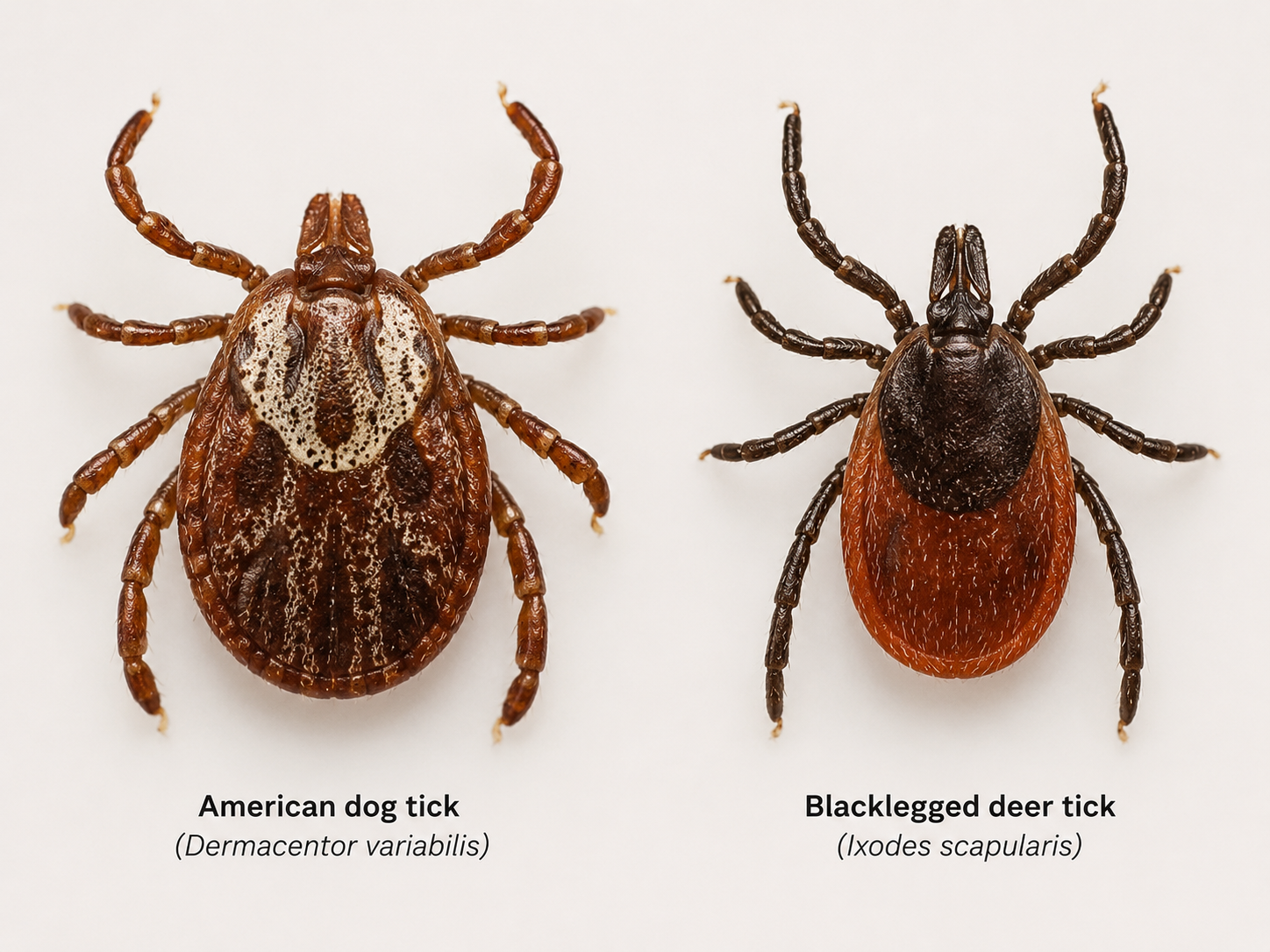
Tick comparison deer tick and dog tick
Knowing how to identify local ticks is the first step in yard safety.

What Types of Ticks Are Most Common in Our Area?

Homeowners in our region primarily encounter two specific species in their outdoor spaces:

  • The Blacklegged Tick: Also known as the deer tick. This species is the primary carrier of Lyme disease. In their nymph stage, they are extremely small, often resembling a tiny speck of dirt or a poppy seed.
  • The American Dog Tick: This species is noticeably larger and frequently attaches to pets exploring tall grass. While they do not carry Lyme disease, they are known carriers for other serious health issues.

Where Do Ticks Hide in Your Yard?

Ticks avoid direct sunlight because it dries them out. They prefer moist, shaded environments. You will typically find them hiding in these four primary locations:

  • The perimeter edge where your manicured grass meets woods or wild vegetation.
  • Underneath low hanging bushes and ornamental shrubs.
  • Inside dense ground covers like ivy.
  • Shaded strips along fence lines or beneath wooden decks.

How Professional Yard Armour Treatments Work

Because ticks isolate themselves in very specific transitional zones, treating the open sunny lawn is rarely effective. Professional pest control requires a targeted approach to stop them at the source.

The Yard Armour program focuses entirely on these breeding and hiding zones. By treating the perimeter, tree lines, and shaded shrubs, it establishes a distinct protective barrier. This method significantly lowers the active population and disrupts their breeding cycle, keeping your open recreational spaces secure without unnecessary blanket spraying.


Lawn Doctor of NE IL / SE WI

Serving Lake Villa (60046), Antioch (60002), and the surrounding communities.

Call us today: (847) 395-0940

Find us online: Facebook | Instagram

Email: group@lawndoctor593.com

Comments

Popular posts from this blog

The Importance of Early Spring Pre-Emergent Weed Control

The Key to a Weed-Free Lawn: Early Spring Pre-Emergent Weed Control As the first signs of spring begin to appear, homeowners across the country start dreaming of lush, green lawns. However, achieving that picture-perfect yard requires more than just hope and sunshine. At Lawn Doctor, we know that the secret to a beautiful lawn lies in proactive care, and one of the most crucial steps is early spring pre-emergent weed control. Let's explore why this treatment is so important and how it sets the stage for a successful lawn care season. What is Pre-Emergent Weed Control? Pre-emergent weed control is a preventative measure that targets weed seeds before they have a chance to germinate and grow. Unlike post-emergent treatments that kill existing weeds, pre-emergent herbicides create a barrier in the soil that stops weed seeds from developing into mature plants. The Importance of Timing When it comes to pre-emergent weed control, timing is everything. Early spring application is crucial ...

Benefits of Rhizome grasses

Bluegrass and Turf-type Tall Fescue Bluegrass and Turf-type tall fescue grass seed blends are both cool season grasses that can thrive in our cool humid growing zone.  One reason they are so popular in the green industry is because they produce rhizomes as part of their reproductive process.  What does this mean?  It means the plant sends out new shoots below ground to repair itself and reproduce across open areas in the lawn.  The picture above is a patch of lawn that died in the early heat and drought this summer.  As the cooler temperatures of August and September arrived, along with some much-needed rainfall, the surviving bluegrass plants began their process of reproducing.  The result is a fuller appearance of turf that will eventually fill in completely without any over-seeding.  This unique characteristic of these grass types is why experienced turfgrass professionals have preferred them for high-maintenance lawns. Many lawn...

Heat tracking in lawns

We have recently noticed a few instances of a somewhat rare phenomenon in the lawn care industry that we would like to point out in an effort to better communicate to both our customers and those interested in lawn care.  Along with the previously posted summer stress issues for the lawn in this blog, we wanted to bring up a more recent issue which is very rare but is currently a potential for lawns across the Antioch, Lake Villa, Lindenhurst, Gurnee, Lake Forest and Waukegan area.  This recent phenomenon is referred to by some in the industry as heat tracking. Heat tracking occurs when pressure is applied to the lawn from foot traffic, lawn mowers, fertilizer spreaders or anything else that can compress the leaf tissue down to the ground below.  When  this pressure is applied at the exact time frame (usually early afternoon at the peak heat of the day) that the turf is at its wilting point or entering dormancy stage it breaks the leaf tissue at the base o...