A lot of homeowners get nervous when they hear the word fertilizer in the middle of summer.
And honestly, I understand why.
When temperatures rise and lawns start turning brown, it is easy to assume fertilizer will burn the lawn or make things worse. We hear this all the time from homeowners in Northern Illinois and Southeast Wisconsin, especially during hot, dry stretches.
But the real answer is simple:
Summer is not the wrong time to fertilize your lawn when it is done correctly.
The key is using the right type of fertilizer, applying it at the right rate, and understanding what the lawn is going through during summer heat.
Not All Fertilizers Work the Same Way
One of the biggest misunderstandings about summer lawn care is that all fertilizer acts the same.
It does not.
Liquid fertilizer can give the lawn a quicker push, which may not always be ideal when temperatures are high and the grass is already under stress.
In the heat of summer, the goal should not be to force fast growth.
The goal should be to maintain steady nutrition.
That is why we use a slow-release granular fertilizer.
A granular fertilizer can sit on the lawn until it is watered in, either by the homeowner or by Mother Nature. Once it receives moisture, it begins to release nutrients slowly and steadily.
Instead of giving the lawn a quick burst, it helps feed the lawn over time.
That matters in summer.
Grass is a living plant. Even when it slows down in the heat, it still needs nutrients available. The goal is not always to make the lawn instantly green.
The goal is to support the lawn so it can handle stress and recover better when better growing conditions return.
Brown Does Not Always Mean Burned
This is one of the most important things homeowners should understand. A brown lawn in summer does not automatically mean the lawn was burned by fertilizer.
Many cool-season lawns in our area go dormant during hot, dry weather. Dormancy is almost like the lawn going into “hibernation mode.” It slows down growth to protect itself.
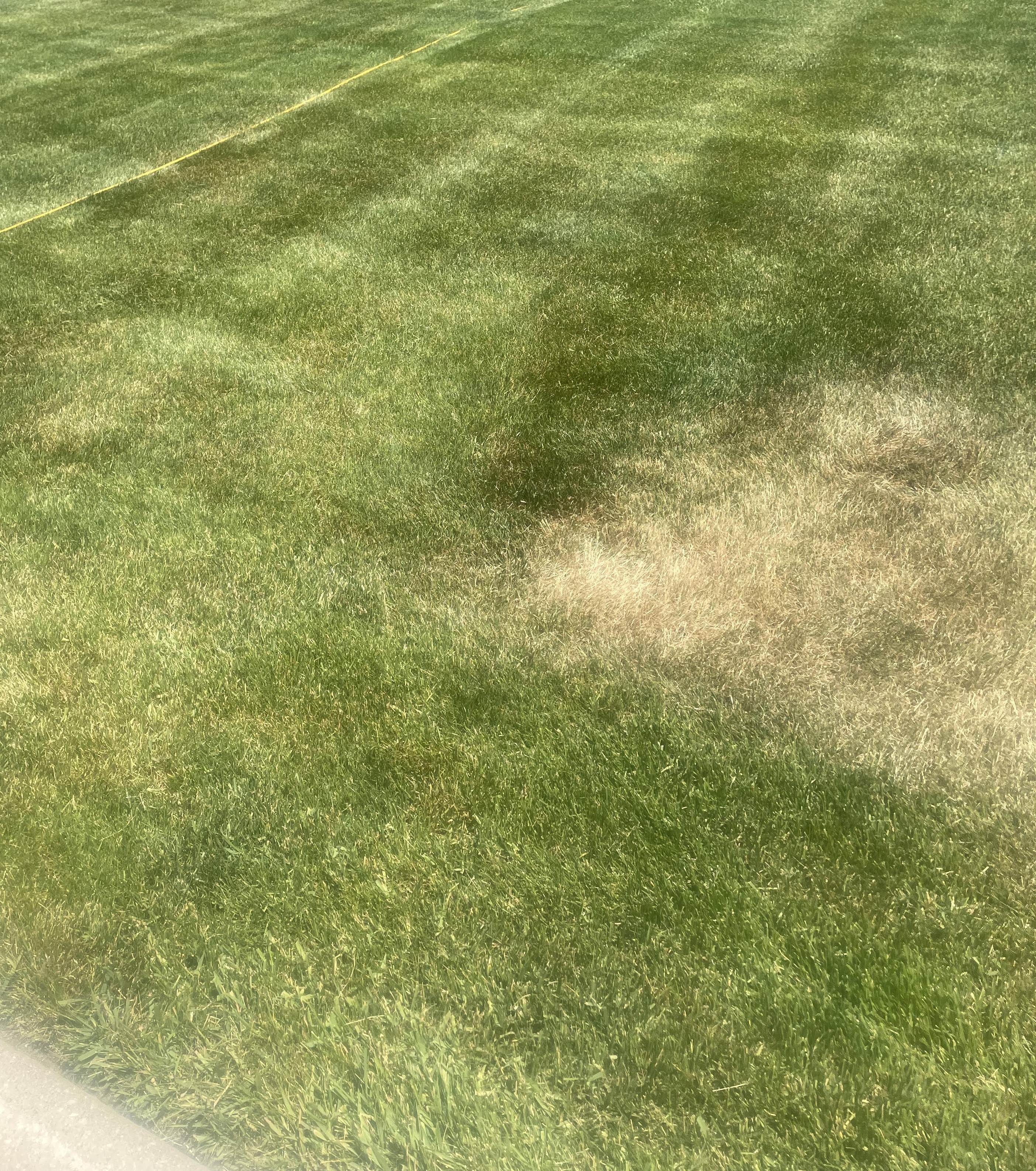
A dormant lawn will often still be standing. You may notice that shaded areas stay a little greener, while the areas that get more direct sun turn brown faster.
That is normal summer stress.
A damaged or dying lawn looks different.
It may be matted down, thin, or not bounce back even after watering. That can point to other problems like disease, insect damage, root damage, or severe drought stress.
This is where homeowners sometimes make the wrong move.
They see brown grass and assume the fertilizer hurt the lawn, so they skip the next application. But skipping can leave the lawn with fewer nutrients available when it finally gets rain and starts growing again.
Why Skipping Summer Applications Can Backfire
We have seen this happen many times.
A customer signs up mid-season, or a first-time homeowner sees the lawn turning brown and gets nervous. They think the lawn was burned, so they want to skip the next application.
Then we service one lawn on the street, while another neighbor skips.
Once the rain comes back, the lawn that stayed on schedule often greens up better and faster than the lawn that skipped.
The reason is not magic.
It is consistency.
The lawn that received the right slow-release granular fertilizer had nutrients available when it needed them. The lawn that skipped had less support going into recovery.
That is why our message is not, “fertilize heavy in summer.”
It is the opposite.
The message is:
Feed the lawn the right way, steadily, without overdoing it.
The Type of Fertilizer Matters
Summer is not the time to throw down just anything from the store and hope for the best.
Different fertilizer blends work differently, especially in our Northern Illinois and Southeast Wisconsin climate.
During summer, you generally want to be careful with high-nitrogen products because too much nitrogen can stress the lawn.
The rate matters too.
If the spreader is not calibrated correctly, or if the wrong amount is applied, that is when homeowners can run into problems.
It is not just about whether you fertilize.
It is about how much, what type, and under what conditions.
That is one of the reasons professional applications can make a difference. We are not guessing. We are choosing products and rates based on the season, the weather, and what local lawns usually need.
We have been treating lawns in this area since 2002. We have seen hot summers, droughts, wet summers, and just about every type of crazy Midwest weather pattern.
Through all of that, slow-release granular fertilizer has remained one of the best ways to keep feeding the lawn steadily.
Should You Water After a Summer Fertilizer Application?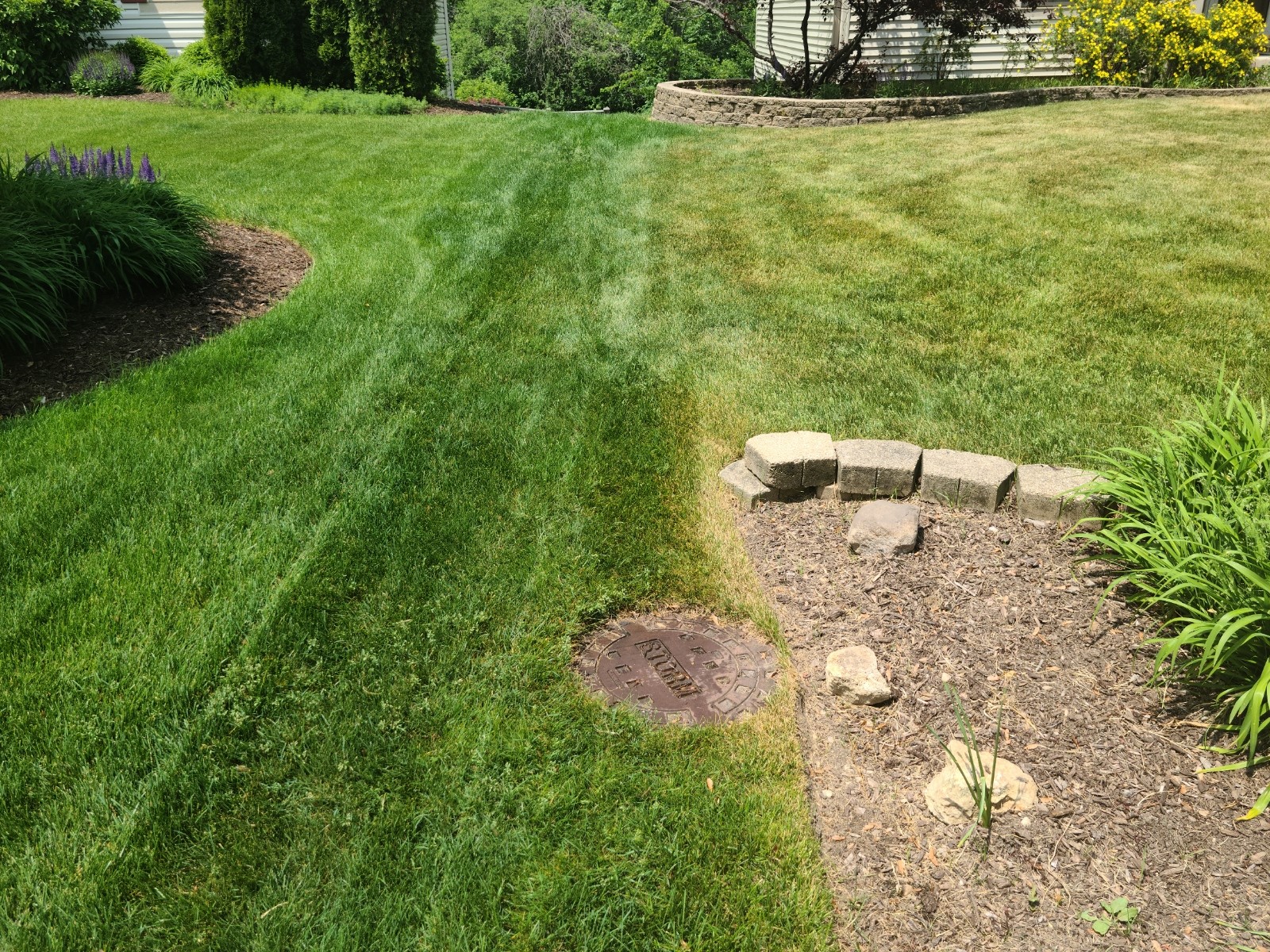
Watering after an application can help activate the fertilizer faster.
For smaller lawns, this is usually easier for homeowners to do.
For larger properties, watering everything evenly can be much harder. That is another reason granular fertilizer is helpful. It gives the homeowner more flexibility because the product can remain there until it gets watered in by rain or irrigation.
If you want quicker activation, watering after the application is a good idea.
But the bigger picture is this:
Your lawn needs consistent moisture during summer.
The goal is to water deeply enough to support the roots, not just wet the surface.
Summer Lawn Care Is More Than Fertilizer
Fertilizer is important, but it is only one part of summer lawn care.
In our area, a good summer lawn care plan should also include:
Weed control
Proper mowing
Regular watering
Each one plays an important role in helping the lawn handle summer stress.
Grub Prevention
For our customers, grub preventative is a must-have in summer.
Grubs usually cause the most noticeable damage later in the season, often when they start feeding on lawn roots.
By the time homeowners see the damage, the lawn may already be pulling up, thinning out, or turning brown in patches.
In our Wisconsin and Illinois area, grubs are typically more active around mid-September through mid-October.
That is why applying a preventative in mid to late summer is so important. It gives the product time to be in the soil so when Japanese beetle eggs hatch, the treatment is already there to target the damaging grubs before they destroy the roots.
In simple terms:
You do not want to wait until the lawn is already damaged.
Weed Control
Summer weeds compete with your lawn for nutrients, water, and space.
The fewer weeds you have, the less competition your grass has.
That matters even more when the lawn is already dealing with heat and drought stress.
Weed control helps give the lawn a better chance to use the nutrients, water, and sunlight available to it.
Mowing Height Matters
Mowing too short is one of the easiest ways to stress a lawn in summer.
We recommend mowing around 3 inches high to help avoid scalping and protect the crown of the grass plant.
When a lawn is cut too short, it has less protection from the sun and heat. It can also dry out faster and become more vulnerable to damage.
A taller lawn helps shade the soil, protect the roots, and reduce stress during hot weather.
Watering Is Crucial
Homeowners also play a major role with watering.
A good target is about 1 to 2 inches of water, roughly twice per week, depending on heat, rainfall, soil, and lawn conditions.
The goal is not to lightly wet the surface every day.
The goal is to water deeply enough to support the root system.
A lawn that is properly watered, mowed at the right height, and fed with the right fertilizer has a much better chance of handling summer stress.
So, Is Summer the Wrong Time to Fertilize?
No.
Summer is not the wrong time to fertilize your lawn.
The wrong approach is using the wrong product, applying too much nitrogen, using the wrong rate, or trying to force fast growth during extreme heat.
When done correctly, summer fertilizer helps maintain a steady supply of nutrients. It supports the lawn while it is under stress and helps it recover when rain and better growing conditions return.
Your lawn may not always look perfect during the hottest weeks of the year.
That is normal.
But with the right fertilizer, proper weed control, grub prevention, mowing, and watering, your lawn can still be one of the best-looking lawns in the neighborhood.
The main thing to remember is this:
Summer fertilizer is not bad when done correctly.
Comments