
Lawns are Fighting the Effects of Summer

Once again this year,  a week or two makes a huge difference in the Midwest weather.  Throughout this week the soil temperatures have shot up into the 100 degree plus range in most sunny areas.  Rainfall has been non-existent since July 1 and we are only at .18" of rainfall so far for the month.  This is the opposite of my July 5 post where I was looking backwards at the conditions of the end of June and praising mother nature for cooler temperatures and rainfall.  This turn of events has been ideal for the growth of lawn diseases such as rust and has severely dried out the clay-based lawns found in most of the Lake county area.  The high heat and lack of rainfall has also resulted in many brown and low-growing lawns across the area.  We all have to remember this is normal for the month of July and early August and every fall when the temperatures drop and rainfall is more common the lawns return to their full green and thick appearance.
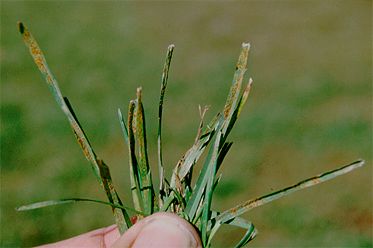
                                                       Rust found on several lawns in the Lake County area 7/17/13

In the meantime we have to be patient with mother nature and adapt ourselves to the situation.  The following tips will greatly enhance the health of your lawn.  Water the lawn in the early morning hours as permitted by local restrictions.  Try to water heavily- 30-45 minutes before moving sprinkler or per zone of you have an irrigation system.  Keep mowing frequency to a minimum.  This means don't mow the lawn unless it is above 3" and thriving- this will only happen after a heavy rain or daily watering on a regular basis.  Keep mower blades sharp.  Dull mower blades cause the lawn to fray and leave behind a yellow cast to the surface.  Stay off of the lawn when it is above 85 degrees outside unless you are setting up a sprinkler for the kids.  

Summer Lawn on left is left uncut and green while lawn on right is cut way too short and browning out.


Follow these free tips for lawn care in the summer and you will have a much more healthier lawn going into fall.  The best practices for summer lawn care are often the little things that are free to the homeowner and should be practiced every summer to avoid costly and unsightly lawn issues.  For further information or to request services from Lawn Doctor click on the link below so that we can assist you in your desire for a healthier lawn.


Comments

Popular posts from this blog

The Importance of Early Spring Pre-Emergent Weed Control

The Key to a Weed-Free Lawn: Early Spring Pre-Emergent Weed Control As the first signs of spring begin to appear, homeowners across the country start dreaming of lush, green lawns. However, achieving that picture-perfect yard requires more than just hope and sunshine. At Lawn Doctor, we know that the secret to a beautiful lawn lies in proactive care, and one of the most crucial steps is early spring pre-emergent weed control. Let's explore why this treatment is so important and how it sets the stage for a successful lawn care season. What is Pre-Emergent Weed Control? Pre-emergent weed control is a preventative measure that targets weed seeds before they have a chance to germinate and grow. Unlike post-emergent treatments that kill existing weeds, pre-emergent herbicides create a barrier in the soil that stops weed seeds from developing into mature plants. The Importance of Timing When it comes to pre-emergent weed control, timing is everything. Early spring application is crucial ...

Benefits of Rhizome grasses

Bluegrass and Turf-type Tall Fescue Bluegrass and Turf-type tall fescue grass seed blends are both cool season grasses that can thrive in our cool humid growing zone.  One reason they are so popular in the green industry is because they produce rhizomes as part of their reproductive process.  What does this mean?  It means the plant sends out new shoots below ground to repair itself and reproduce across open areas in the lawn.  The picture above is a patch of lawn that died in the early heat and drought this summer.  As the cooler temperatures of August and September arrived, along with some much-needed rainfall, the surviving bluegrass plants began their process of reproducing.  The result is a fuller appearance of turf that will eventually fill in completely without any over-seeding.  This unique characteristic of these grass types is why experienced turfgrass professionals have preferred them for high-maintenance lawns. Many lawn...

Heat tracking in lawns

We have recently noticed a few instances of a somewhat rare phenomenon in the lawn care industry that we would like to point out in an effort to better communicate to both our customers and those interested in lawn care.  Along with the previously posted summer stress issues for the lawn in this blog, we wanted to bring up a more recent issue which is very rare but is currently a potential for lawns across the Antioch, Lake Villa, Lindenhurst, Gurnee, Lake Forest and Waukegan area.  This recent phenomenon is referred to by some in the industry as heat tracking. Heat tracking occurs when pressure is applied to the lawn from foot traffic, lawn mowers, fertilizer spreaders or anything else that can compress the leaf tissue down to the ground below.  When  this pressure is applied at the exact time frame (usually early afternoon at the peak heat of the day) that the turf is at its wilting point or entering dormancy stage it breaks the leaf tissue at the base o...