
Mushrooms in my lawn!


Mushrooms are popping out of the lawn(tip of the iceberg)

We have been getting several calls regarding the growth of mushrooms in the lawns recently.  Which makes perfect sense because we have had rain almost every day for the last two weeks!   Why does this make sense?  Let me explain.  Mushrooms are the fruiting body of fungal spores located below the surface of the soil in the lawn.  They are the the mere tops of the icebergs.  The active fungi spores are not large enough to even be seen and are located under the surface of the soil, where they are naturally found in nature and are actively decomposing organic matter in the soil.  This organic matter is usually made up of woody materials like dead tree roots, old stumps, construction lumber and most commonly wood mulch dumped into the lawn when doing the last mulching project in your landscape.  The fungi spores survive in the soil for years and produce fruiting bodies (mushrooms) when conditions are favorable. Favorable conditions are extended periods of wet weather and a lack of sunlight which also accompanies heavy rains and which have been very prominent during the past two weeks.
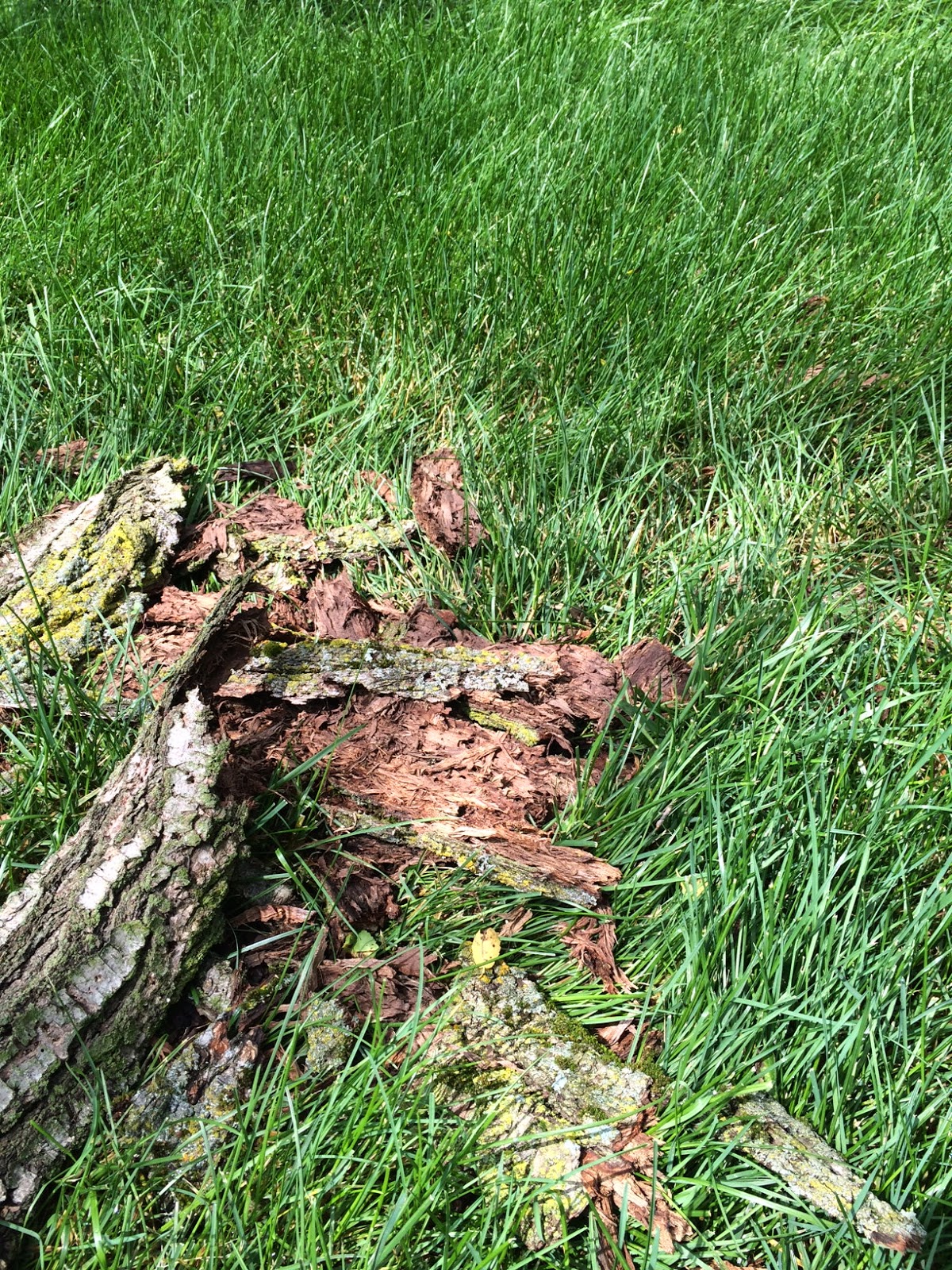

Tree bark from a recent storm that will develop mushroom problems in the future if not removed from the lawn.

The mushrooms that develop in the lawn during prolonged wet periods are actually a positive sign for your lawn.  Their presence indicates that the lawn is naturally and organically decomposing organic matter in the soil and therefore allowing nutrients from fertilizers, lawn clippings and leaf mulching to be broken down and available for the turf to uptake.  Although the fungi responsible for the common lawn mushrooms pose no threat to the lawn itself and are not going to harm the turf, many homeowners find them as an eyesore.  The best way to eradicate your lawn from this eyesore is to physically remove them from the lawn with a hoe or rake or simply mowing them over.  

Proof that mulch chunks left in the lawn from a previous years mulch project decaying and becoming a source of fungi growth.

Please share or follow us on Facebook for more helpful lawn care updates.

Contact us today at:  847-395-0940 or at: group593@lawndoctor.com


Or Find us on Facebook


Comments

Popular posts from this blog

The Importance of Early Spring Pre-Emergent Weed Control

The Key to a Weed-Free Lawn: Early Spring Pre-Emergent Weed Control As the first signs of spring begin to appear, homeowners across the country start dreaming of lush, green lawns. However, achieving that picture-perfect yard requires more than just hope and sunshine. At Lawn Doctor, we know that the secret to a beautiful lawn lies in proactive care, and one of the most crucial steps is early spring pre-emergent weed control. Let's explore why this treatment is so important and how it sets the stage for a successful lawn care season. What is Pre-Emergent Weed Control? Pre-emergent weed control is a preventative measure that targets weed seeds before they have a chance to germinate and grow. Unlike post-emergent treatments that kill existing weeds, pre-emergent herbicides create a barrier in the soil that stops weed seeds from developing into mature plants. The Importance of Timing When it comes to pre-emergent weed control, timing is everything. Early spring application is crucial ...

Heat tracking in lawns

We have recently noticed a few instances of a somewhat rare phenomenon in the lawn care industry that we would like to point out in an effort to better communicate to both our customers and those interested in lawn care.  Along with the previously posted summer stress issues for the lawn in this blog, we wanted to bring up a more recent issue which is very rare but is currently a potential for lawns across the Antioch, Lake Villa, Lindenhurst, Gurnee, Lake Forest and Waukegan area.  This recent phenomenon is referred to by some in the industry as heat tracking. Heat tracking occurs when pressure is applied to the lawn from foot traffic, lawn mowers, fertilizer spreaders or anything else that can compress the leaf tissue down to the ground below.  When  this pressure is applied at the exact time frame (usually early afternoon at the peak heat of the day) that the turf is at its wilting point or entering dormancy stage it breaks the leaf tissue at the base o...

Spring of 2016 has sprung, kind of...

Lawn Early April 2016 The spring of 2016 has brought just as many surprises and challenges as any in the past few years since we began writing this blog.  The spring began with a lot of early sunshine in March and no snow cover, which resulted in little to no snow mold on the lawn this spring.  The early sunny days allowed for the grass to begin greening up as the sun began slowly rising higher in the sky.  Although the temperatures did not rise early the sunlight allowed for the first phase of the lawn to begin waking in spring.  The lawn goes through two stages in spring, greening up- which allows for sunlight absorption to begin producing food for the plant through photosynthesis.  The second stage of spring lawn is growth which comes after photosynthesis begins and soil temperatures rise with warming temperatures.  Various weather conditions each spring is what causes varying spring green up and growth.   Lawn Early April 2015 ...